Biomimetic Restorative Dentistry for Endodontically Treated Teeth
The traditional approach for endodontically treated teeth is a full-coverage crown, but even non-vital teeth can benefit from more conservative treatment. Full-coverage crowns remove tooth structure that is critical to a tooth’s natural function, further weakening an already brittle tooth. The advanced adhesion and stress reduction of biomimetic restorative dentistry offer better outcomes for endodontically treated teeth by supporting the remaining tooth structure. This prevents decay and fracture that would require more aggressive treatment in the future.
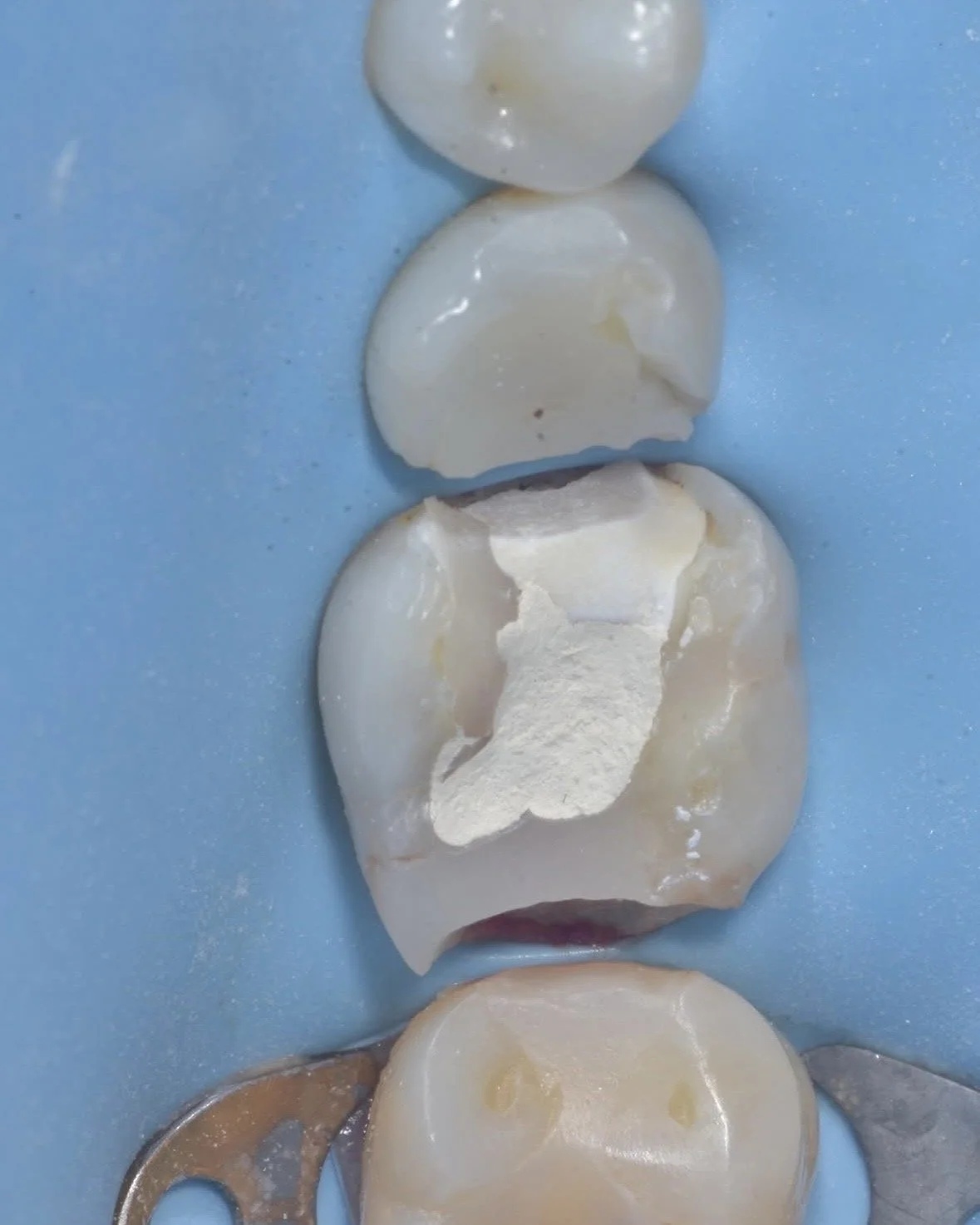
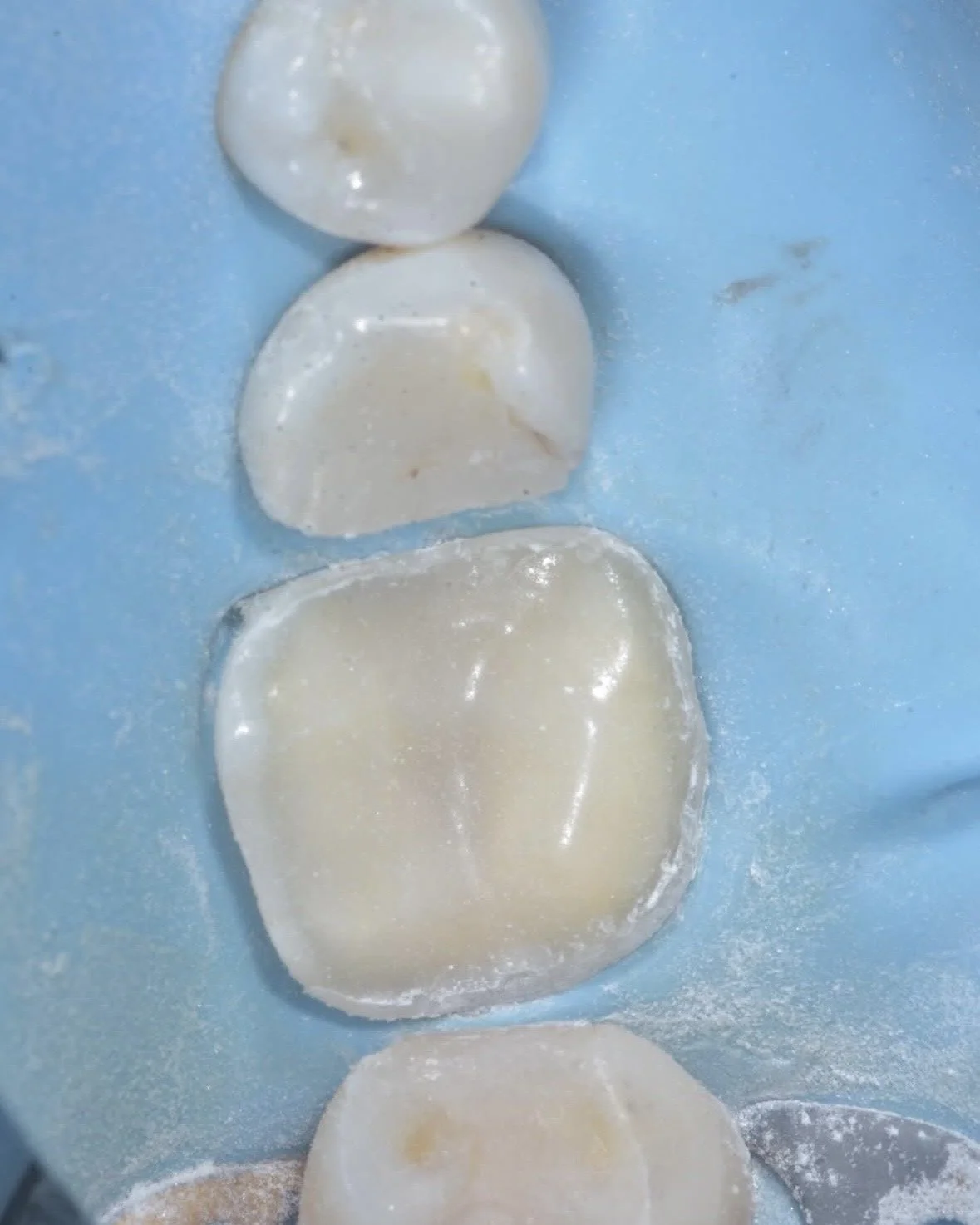
This case example by Dr. Davey Alleman, DMD, shows a conservative alternative to a full-coverage crown for endodontically treated teeth.
Challenges in Restoring Non-Vital Teeth
Dentin is 20% water, which allows teeth to be flexible under the forces of occlusion. Non-vital teeth lose about 60% of this hydration when the pulp is removed, making them more brittle and susceptible to fracture. A 2007 study by Kishen and Vedantam confirmed what restorative dentists were already observing clinically: non-vital teeth behave differently from vital teeth under occlusal stress, and treating them the same way as vital teeth leads to predictable failures.
A finite element analysis by Belser and Magne (2002) adds another critical insight: under normal chewing forces, there is tremendous stress concentration in the cervical 2–3 mm of the tooth. Dr. David Alleman, DDS, named this area the biorim because it is the most structurally critical part of the tooth. The biorim, this critical structure to the tooth, is exactly what conventional crown preparations destroy.
Crown preparations that remove a non-vital tooth’s stress absorption, paired with more brittle dentin, mean these teeth are at greater risk of fracture and catastrophic failure with a traditional full-coverage crown. Dr. David Alleman’s Six Lessons Approach outlines a new set of protocols for restoring these teeth more conservatively that support the tooth structure and prevent catastrophic failure.
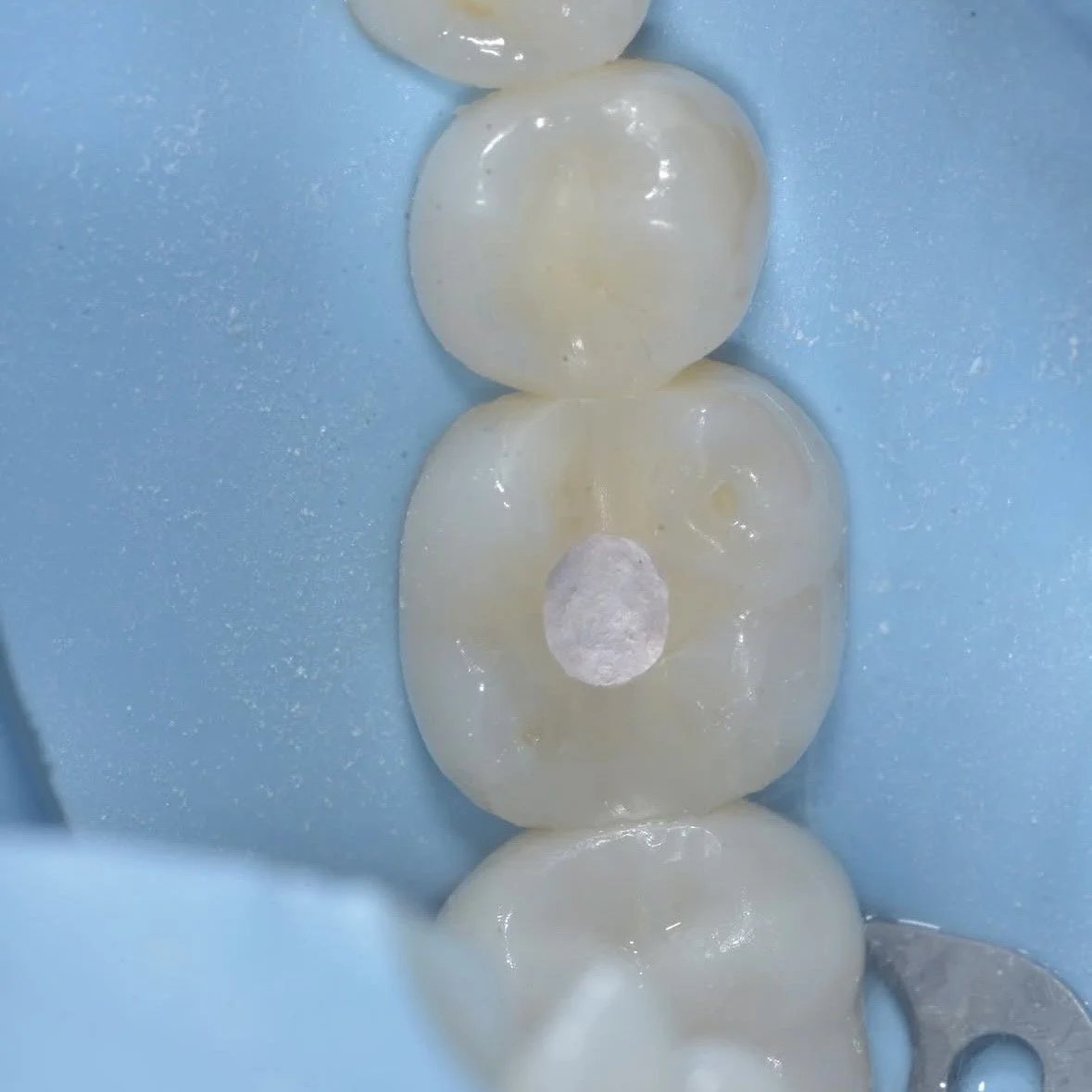
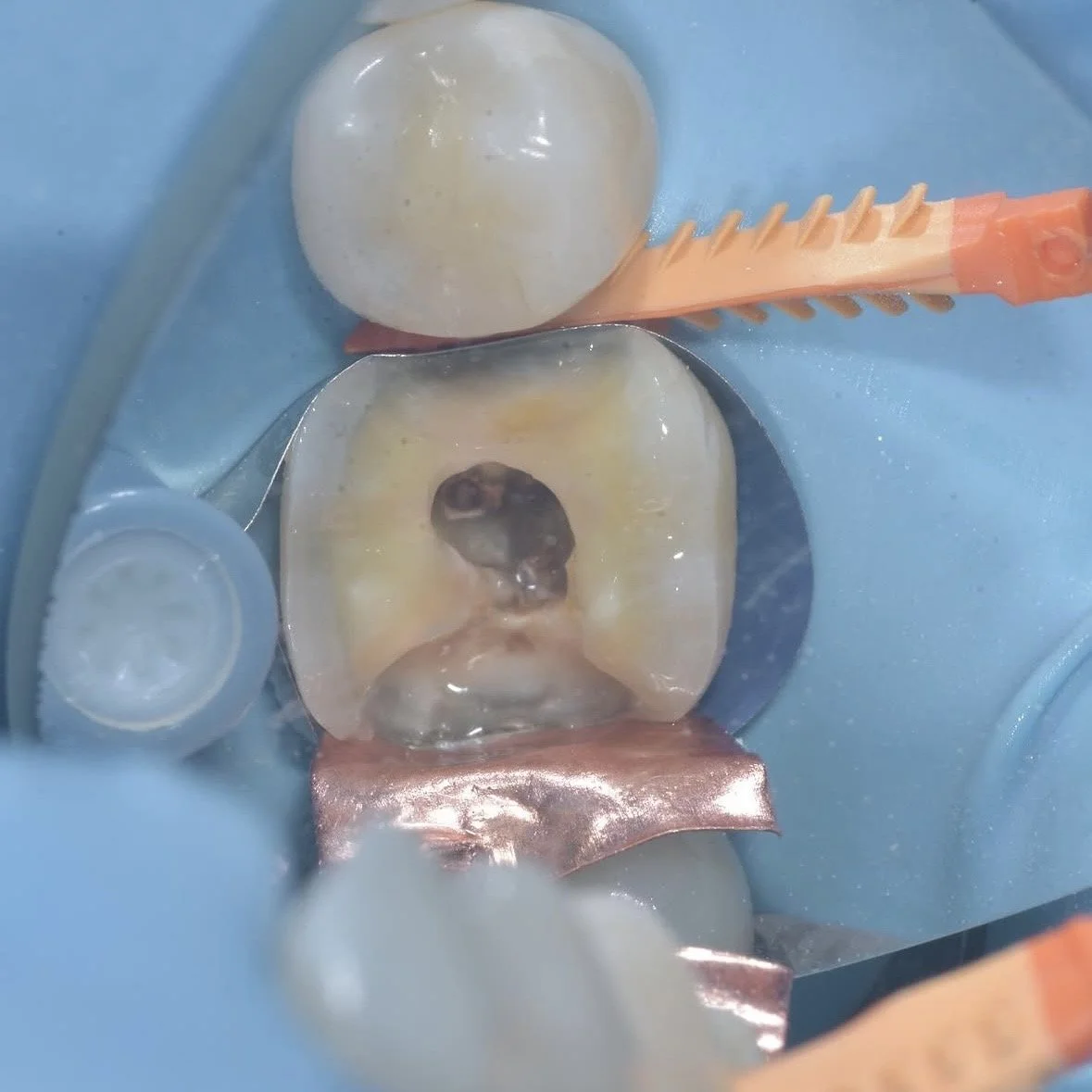
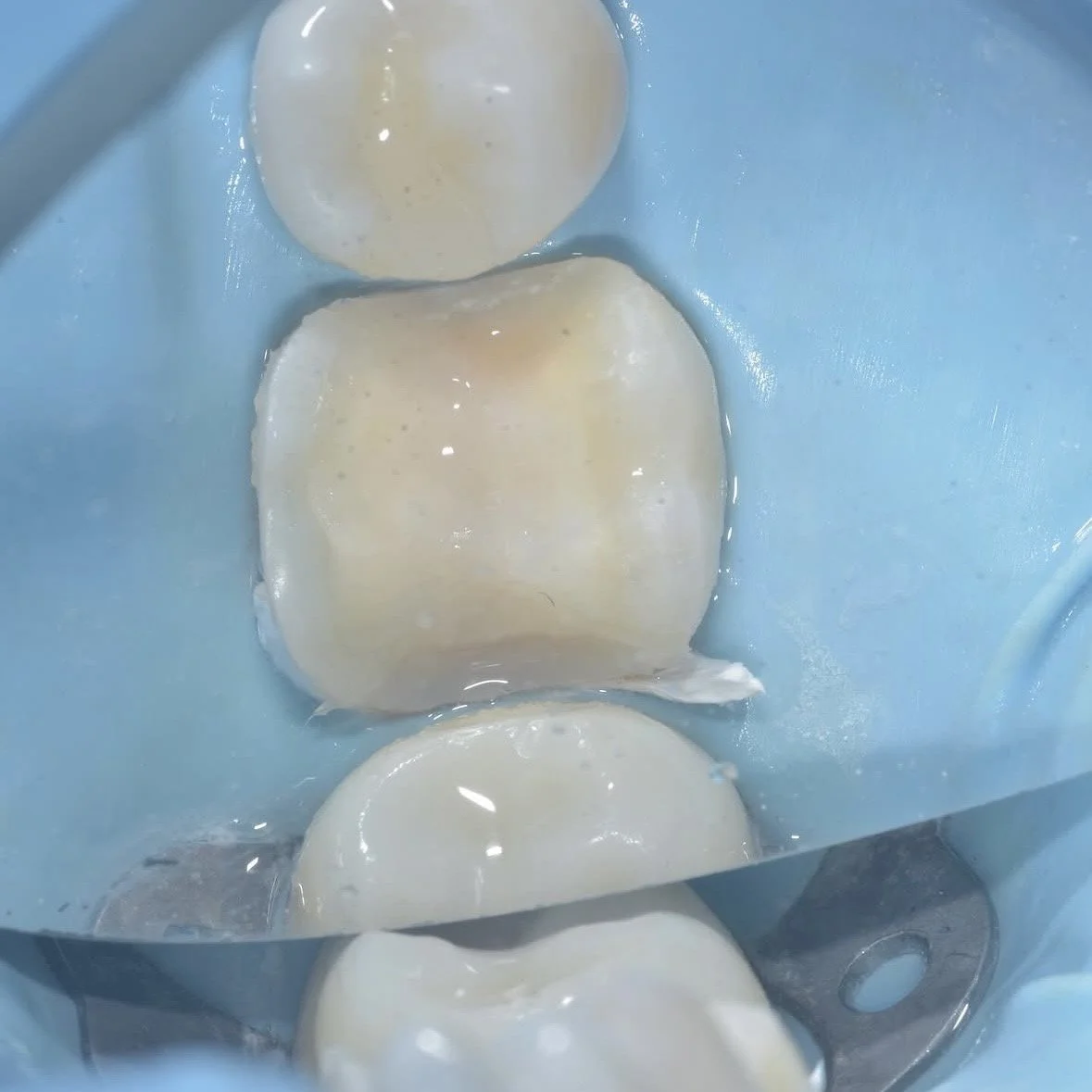
The advanced adhesive techniques of biomimetic restorative dentistry benefit non-vital teeth by providing stress reduction and stronger bonds. Case by Dr. Davey Alleman, DMD.
Biomimetic Principles for Restoring Endodontically Treated Teeth
In vital teeth, cavity preparation works from the outside in to prevent pulp exposure. In non-vital teeth, that constraint disappears. With the pulp already gone, clinicians can work from the inside out — fully removing deep decay and dissecting cracks that extend well down into the root, sometimes 9–11mm deep.
This complete caries and crack removal protects the tooth’s long-term function by preventing reinfection and crack propagation under the restoration. Once pathologies are treated, biomimetic techniques such as immediate dentin sealing, resin coating, fiber placement and stress reduction create bonds to the tooth that support the remaining tooth structure and allow the tooth and restoration to work as a cohesive unit. This reduces the chance of catastrophic failure compared to full coverage crowns that have been shown to work in opposition to the remaining tooth structure, stressing it more than it is designed to do. Biomimetic restorations, even in non-vital teeth, work with the natural tooth structure to protect the tooth long-term.
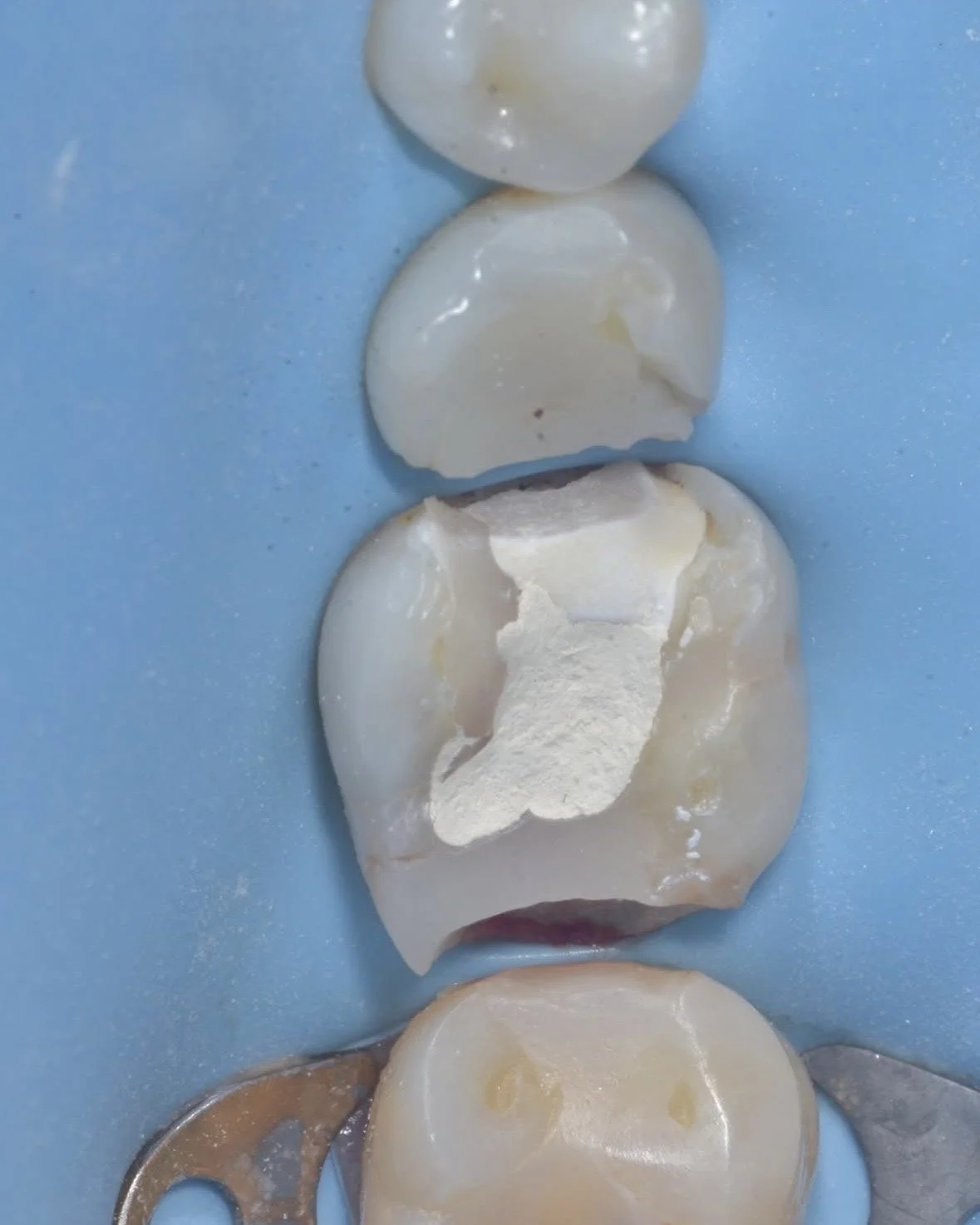
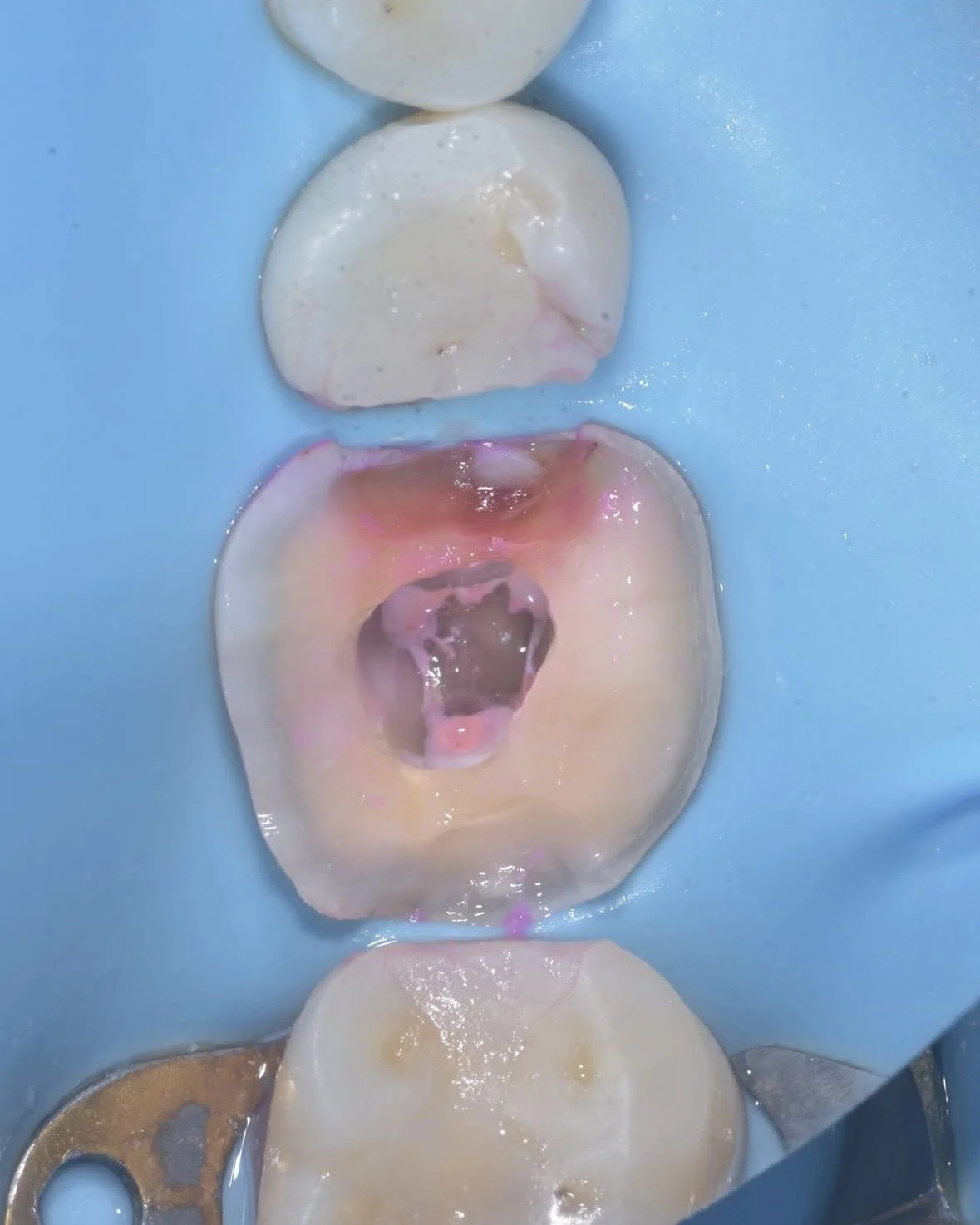
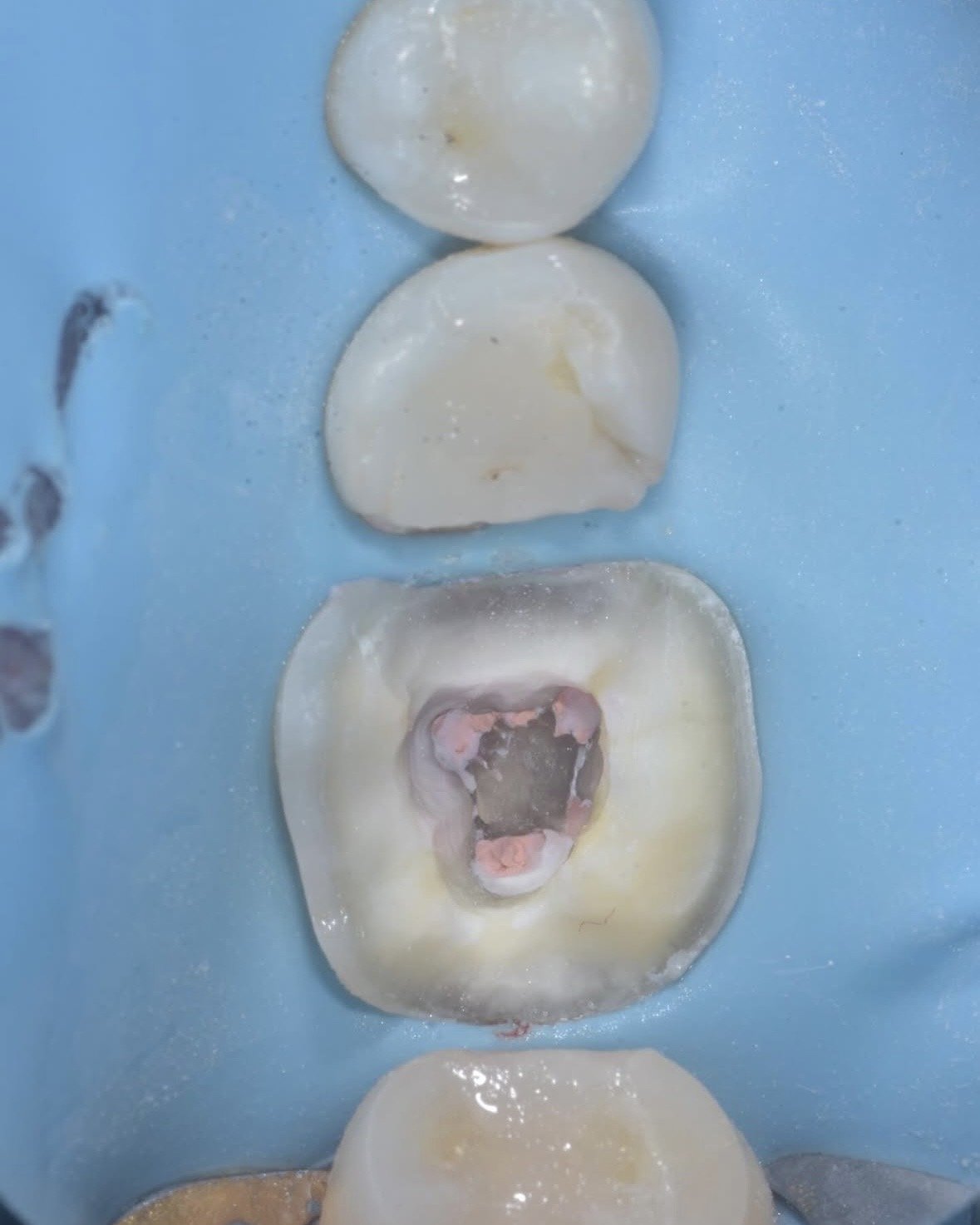
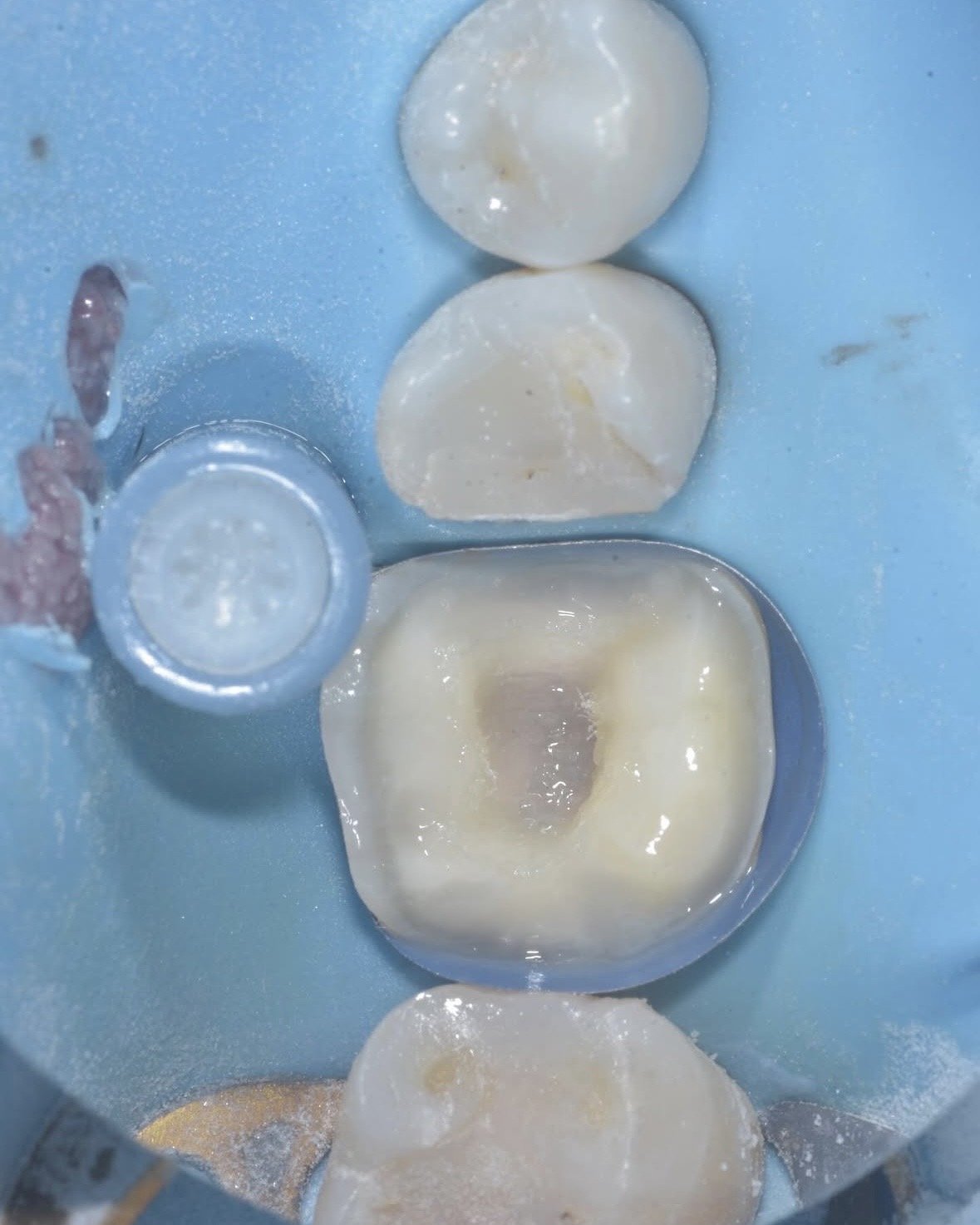
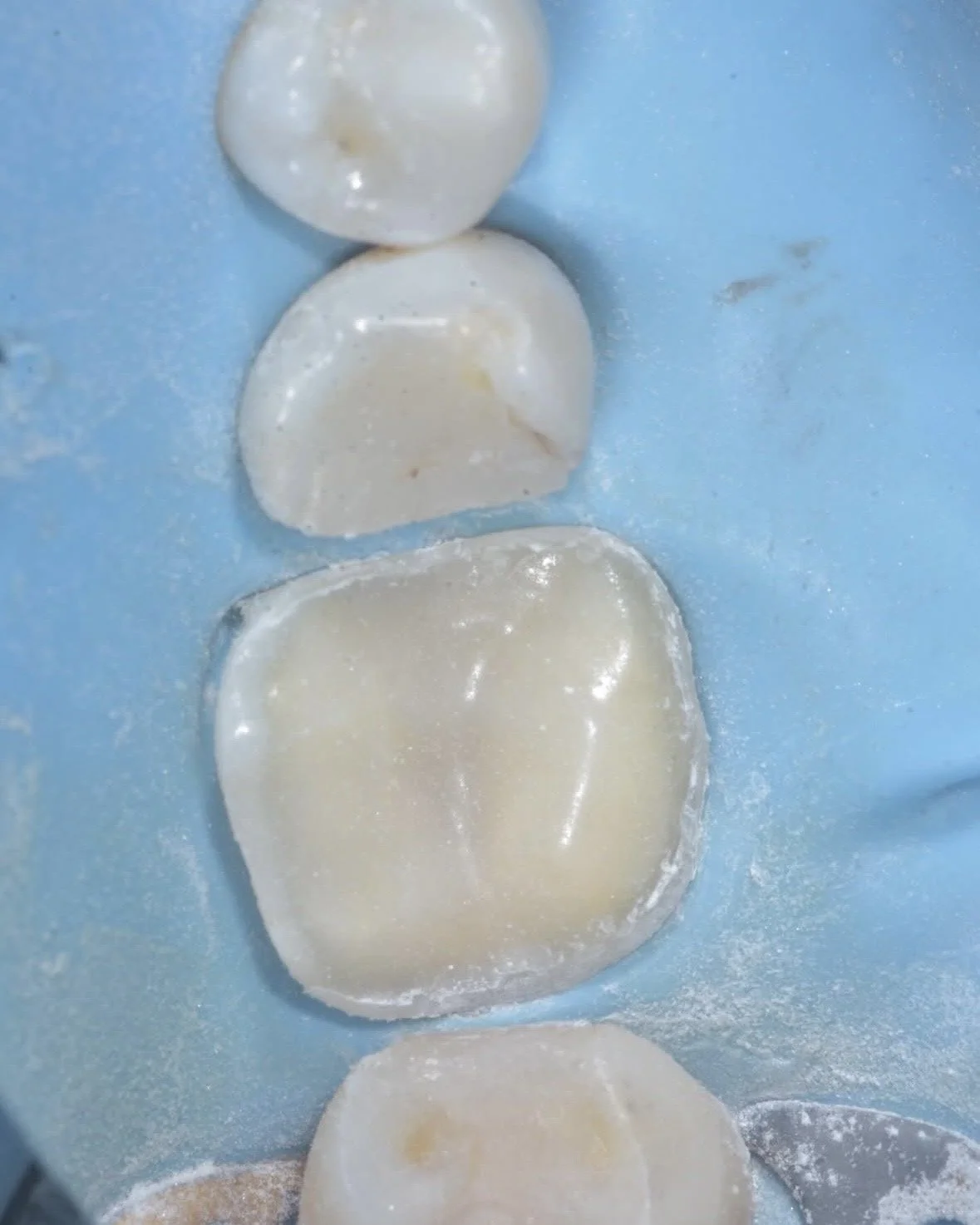
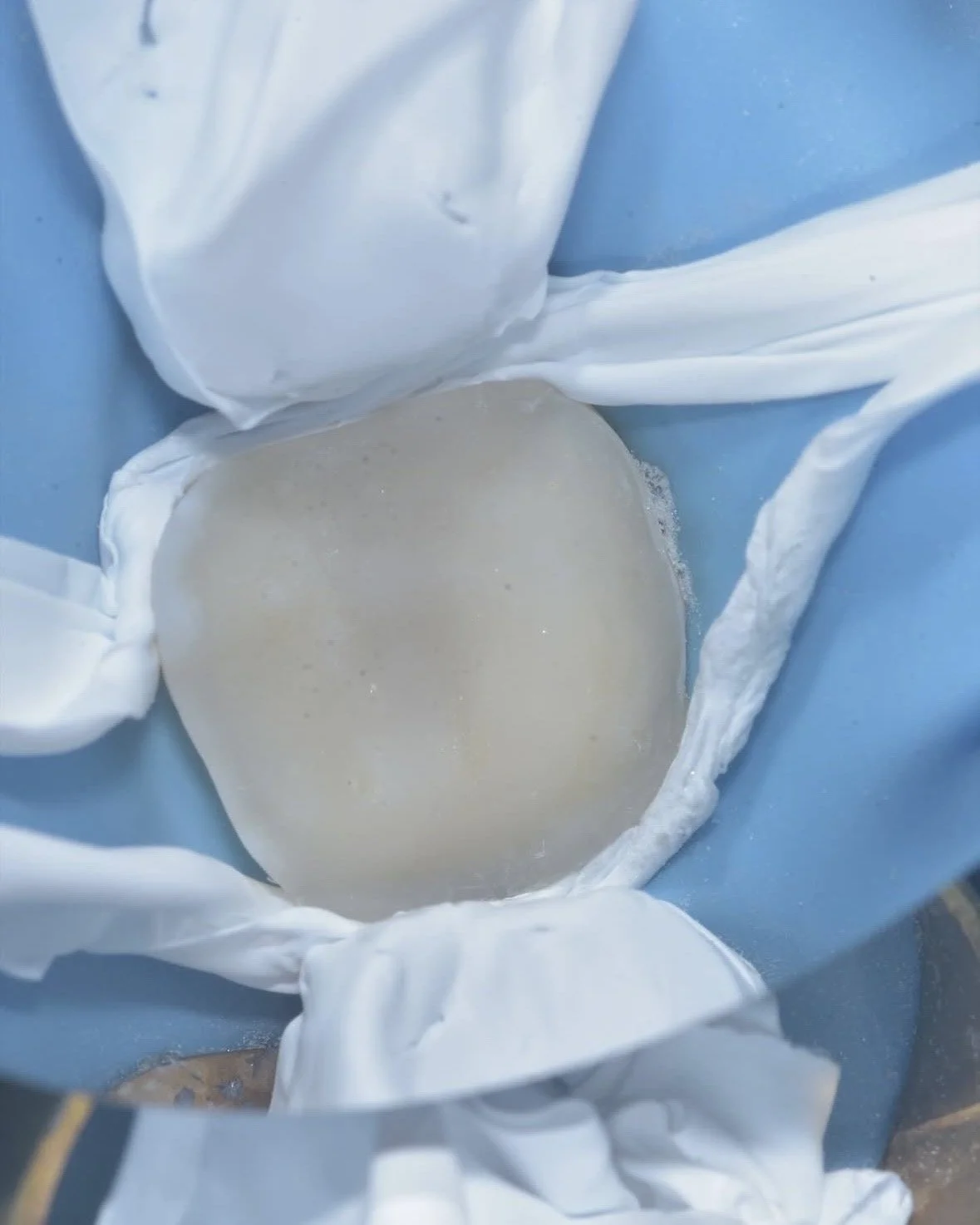
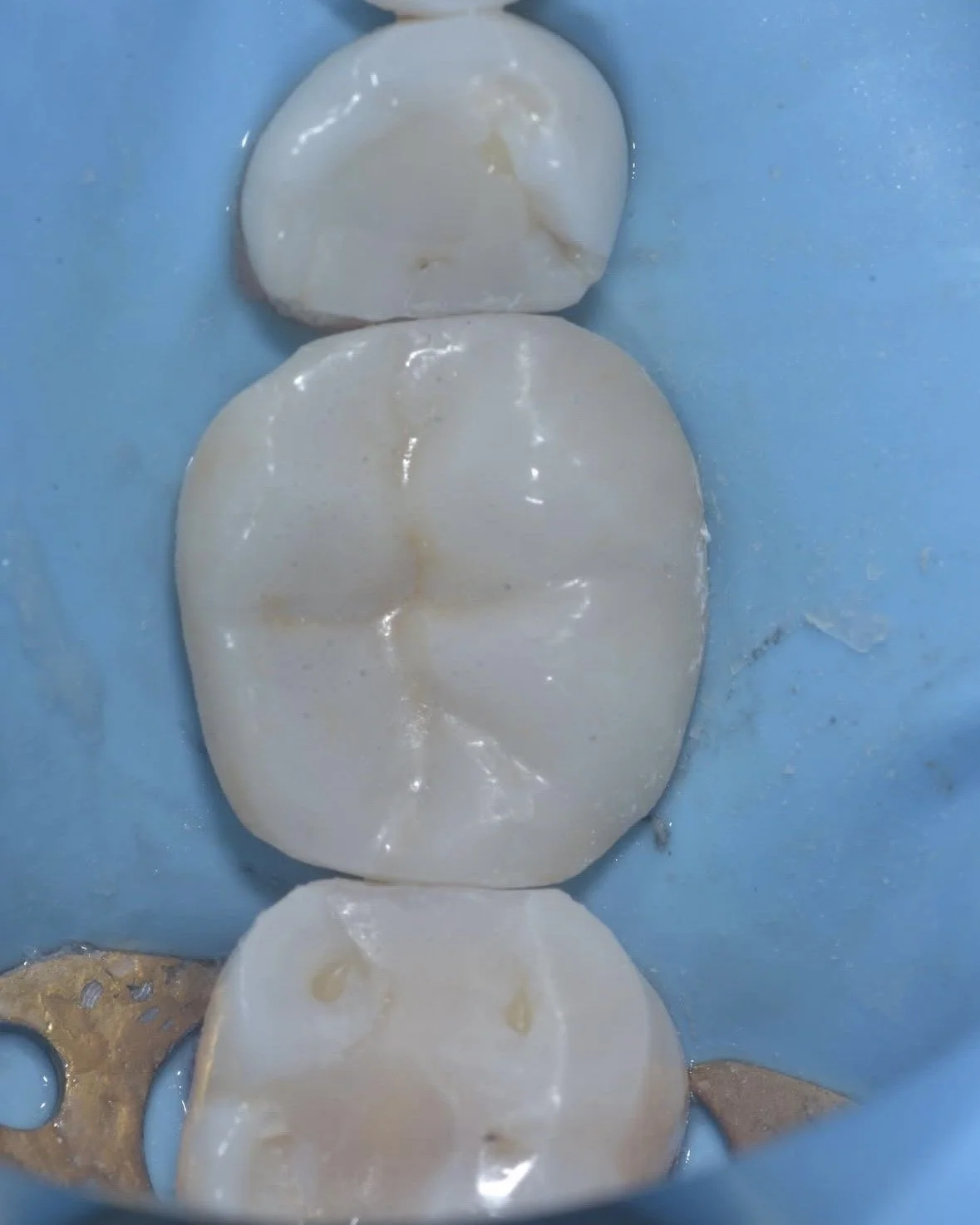
Case example using the Six Lessons Approach protocols on a non-vital tooth by Dr. Davey Alleman, DMD.
Prognosis for Non-vital Teeth Restored with Biomimetic Dentistry
While the best case for a tooth is to preserve its vitality and prevent endodontic treatment, many teeth will still require a root canal. Having treated non-vital teeth with these conservative adhesive principles, Dr. David Alleman has seen what is possible for teeth that otherwise would have been deemed “non-restorable.”
Depending on the severity of the fracture and damage to existing tooth structure, non-vital restorations can last as little as three years, but some have remained functional for decades. The patient must decide between restoring the tooth they have or moving forward with extraction. Bridges, dentures and implants come with their own set of costs, complications and life expectancies, so many patients choose to keep the tooth they have and put off more expensive and invasive treatment options until they are necessary.
Non-vital teeth pose a greater challenge to practitioners than vital ones, but with the right protocols, many teeth that other dentists would extract can be preserved — often for the remainder of a patient's life and for a fraction of the cost of an implant. Learn the protocols and research for restoring endodontically treated teeth in the Biomimetic Mastership, Dr. David Alleman’s most popular training program.
Learn more about biomimetic dentistry for endodontically treated teeth in Dr. David Alleman’s Six Lessons Approach Podcast.